ESG Flo
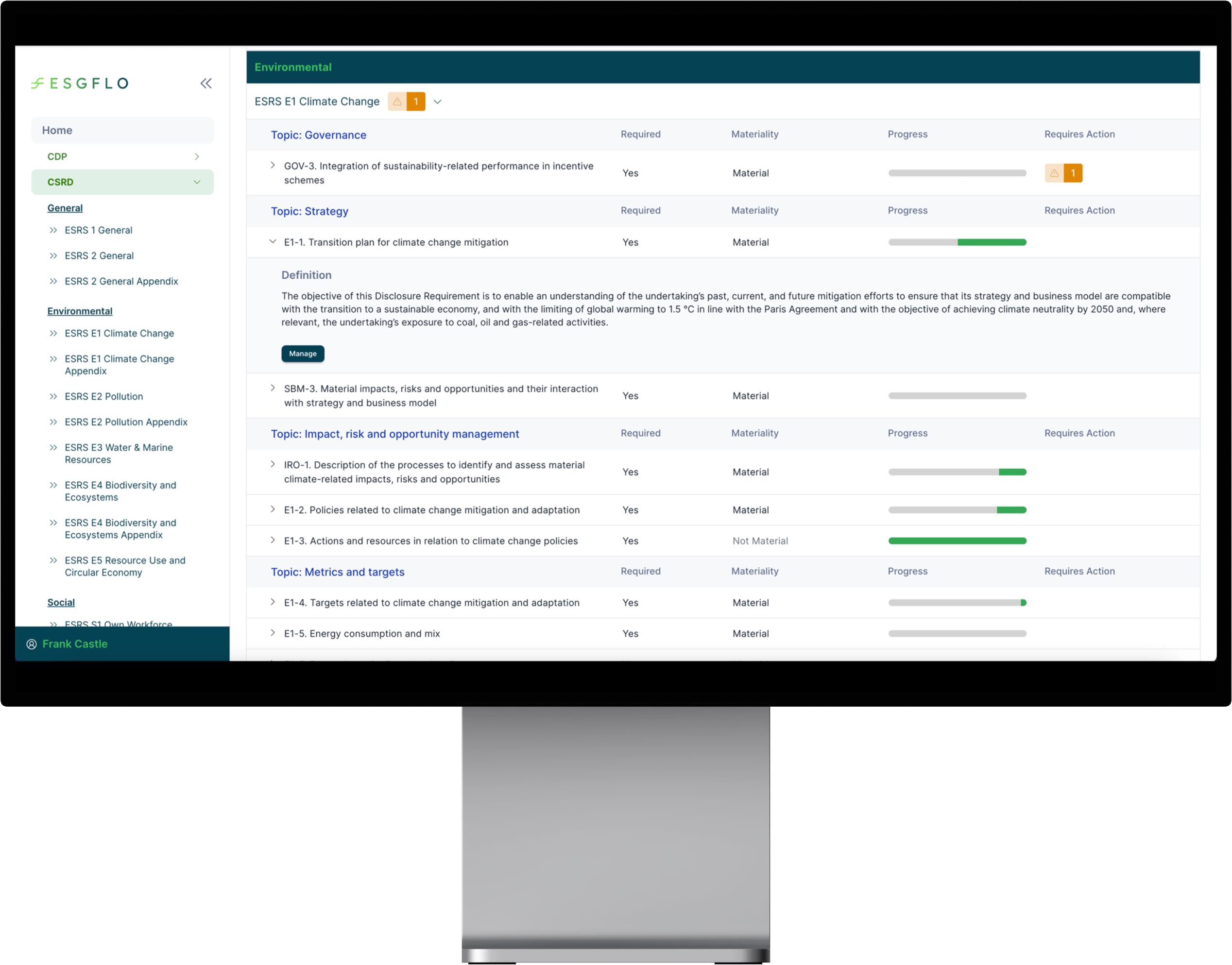
ESG Flo is a sustainability reporting platform that helps organizations understand which ESG regulations apply to them, streamline data collection, and produce audit-ready reports
Challenge

As ESG regulations expanded, many organizations struggled to understand requirements and manage ESG data using spreadsheets - a process that was confusing, time-consuming, and difficult to audit. ESG Flo needed a scalable product that can turn regulatory complexity into a clear, structured workflow.
Solution
I led the design of ESG Flo’s sustainability reporting platform from 0 to 1, creating a centralized system for ESG data collection, cross-functional collaboration, and audit-ready reporting, enabling organizations to confidently navigate evolving compliance requirements.
Context
ESG Flo wants to help organizations prepare for ESG disclosure mandates by offering a software solution designed to facilitate precise ESG data collection and ensure audit readiness when putting together comprehensive sustainability reports. Many organizations still rely on Excel to manage their company ESG data, which can be extremely frustrating to work with due to its limitations in handling the complexity, volume, and automation required for efficient data collection, analysis, and reporting in compliance with evolving regulatory frameworks.
Problem Framing
Most organizations still manage ESG reporting manually, using spreadsheets and email threads. This creates major operational and compliance risks, including:
- Chasing ESG data from multiple teams across the organization
- No clear visibility into who owns which data or what’s already been submitted
- No clear visibility into who owns which data or what’s already been submitted
Validating the Problem and Market Opportunity
During my first month at ESG Flo, I led user interviews with sustainability managers to understand their day-to-day responsibilities and the challenges of compiling annual sustainability reports. Most teams relied on a mixture of Excel spreadsheets, email threads, and shared drives - a manual process that was slow, error-prone, and difficult to audit. Our team also conducted a competitive analysis to understand the existing ESG software landscape. What we found confirmed a major gap in the market: while there were tools for data visualization and reporting, none were truly designed to support end-to-end sustainability compliance.
.jpg)
.jpg)
Translating Regulation Into a Product Structure
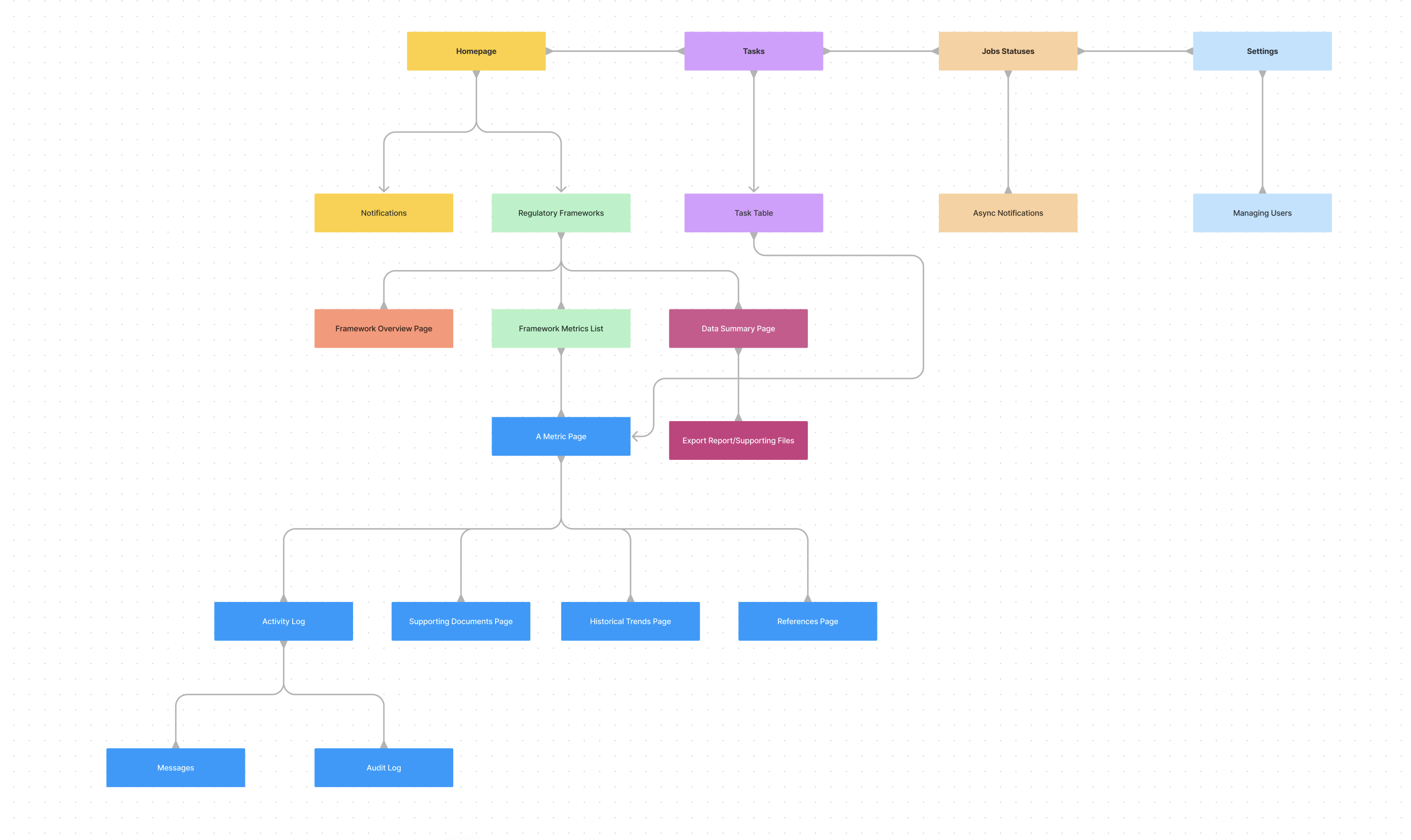
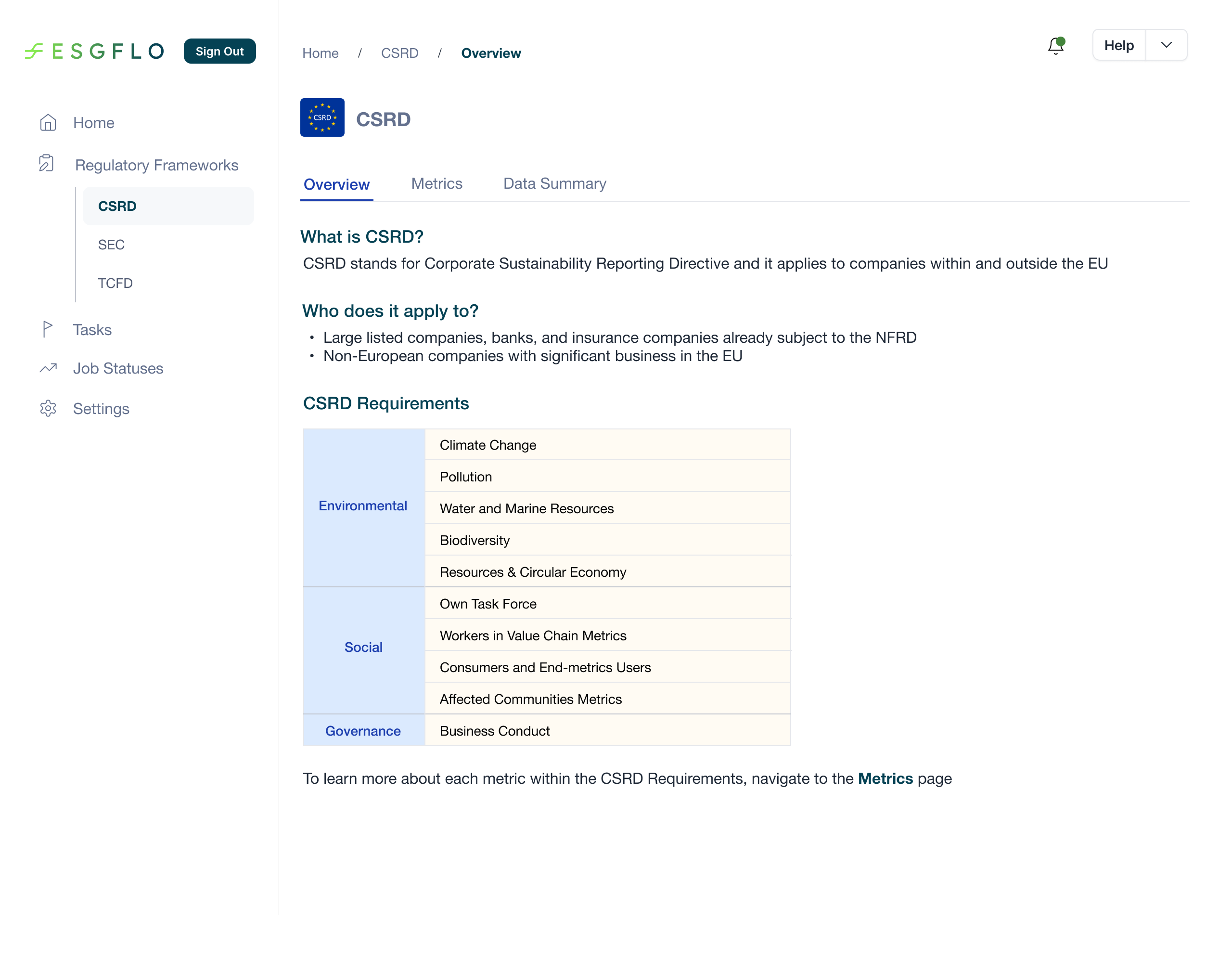
After several whiteboarding sessions with Product, we aligned on the initial MVP feature set. From there, I focused on translating the complex CSRD regulatory framework into a clear information architecture.This step was critical as it creates the structural backbone of the product and ensures that our features mapped cleanly to real-world reporting requirements across multiple regulatory frameworks.
From Structure to Screens
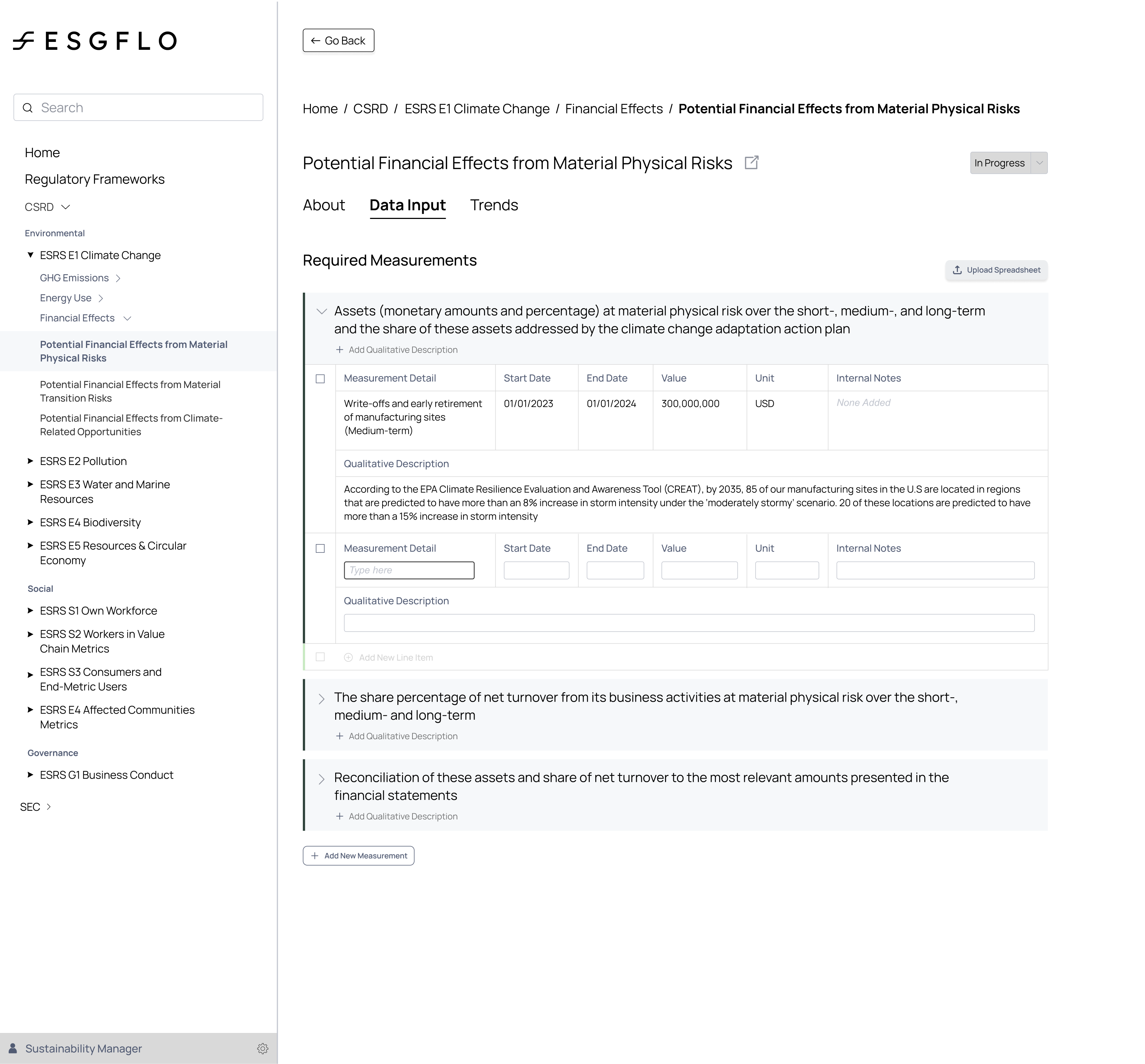
With the information architecture in place, I moved quickly into low-fidelity wireframing. We had a board review scheduled three days later, so my goal was to translate the core workflows into clear, testable screens that demonstrated how the product would function end-to-end.
.png)
Aligning our MVP with ESG Flo's Brand Identity
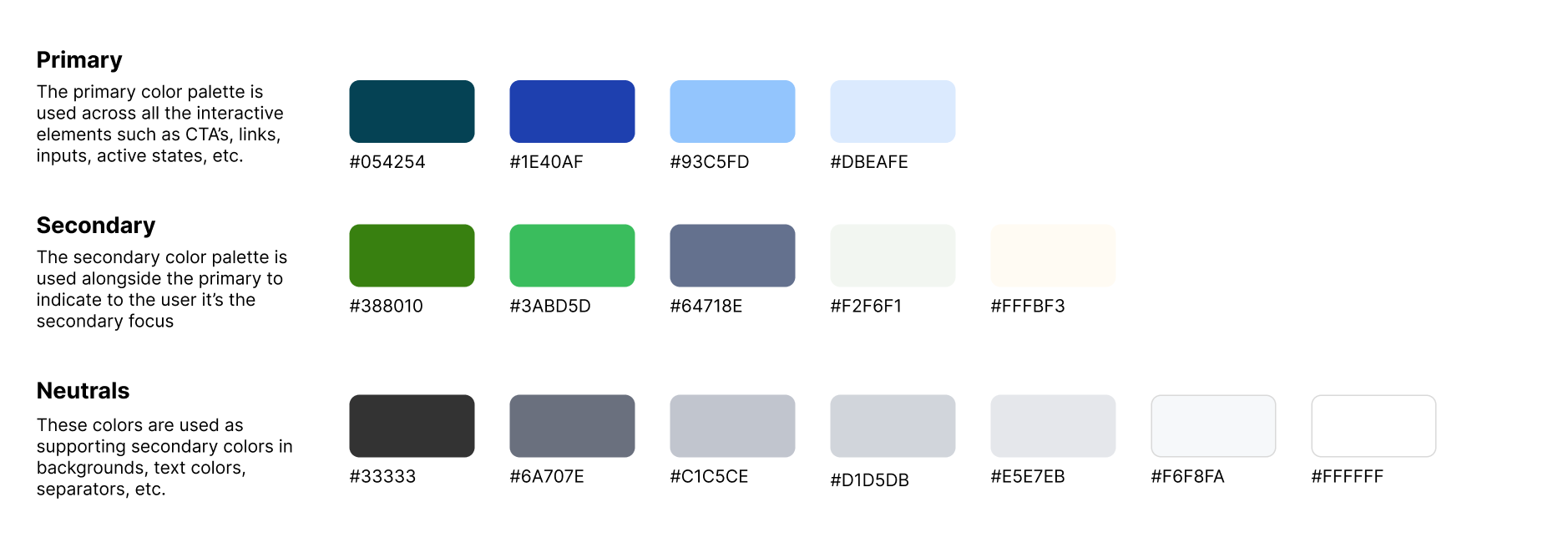
Following several iterations of our low-fidelity wireframes, the next step was to elevate them to high fidelity. Collaborating closely with the Marketing team to ensure that our MVP aligned with the company's branding, I developed a style guide to ensure the color contrast of the product was in compliance with ADA and WCAG accessibility requirements.
Partnering With Engineering for a Smooth Product Launch
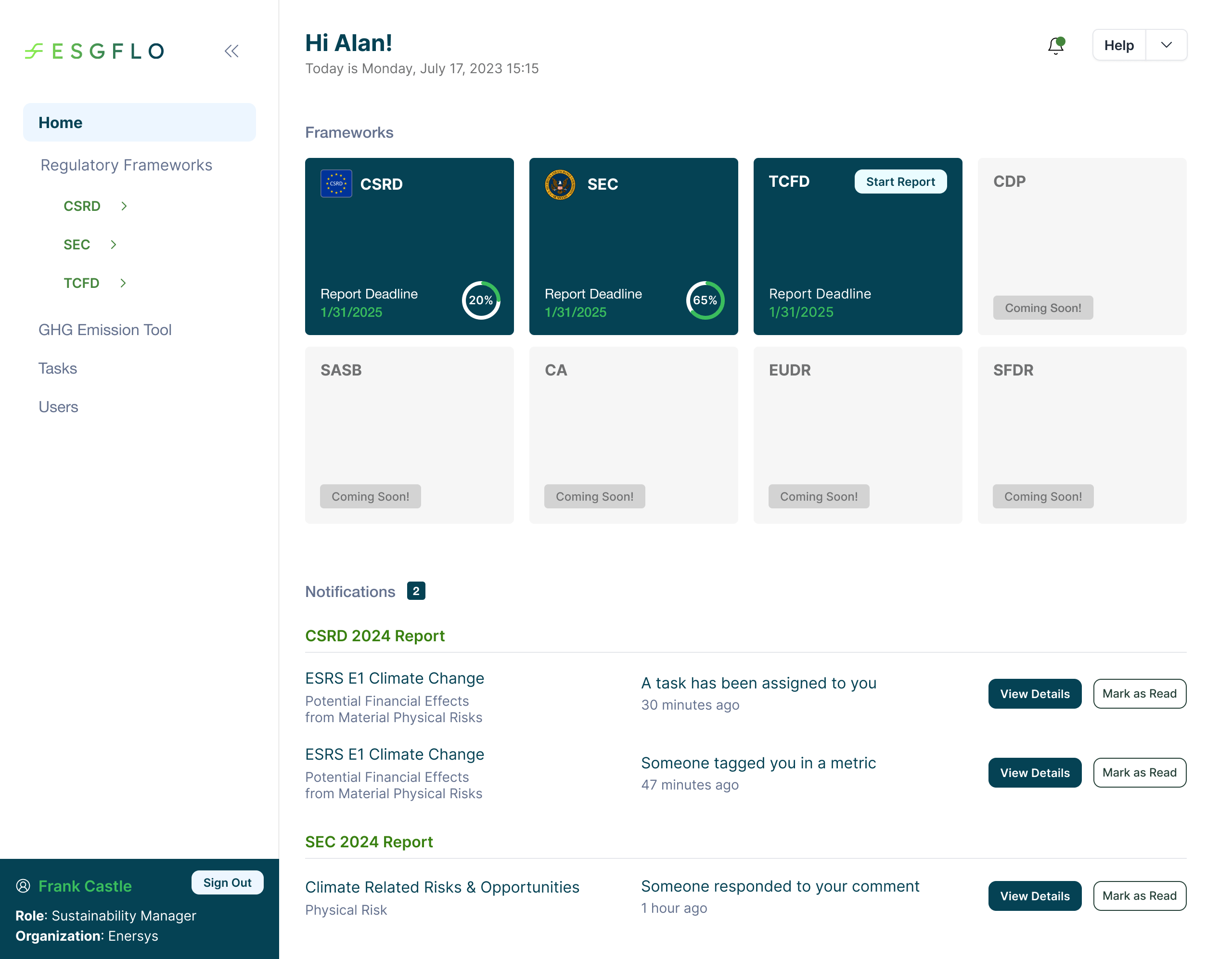
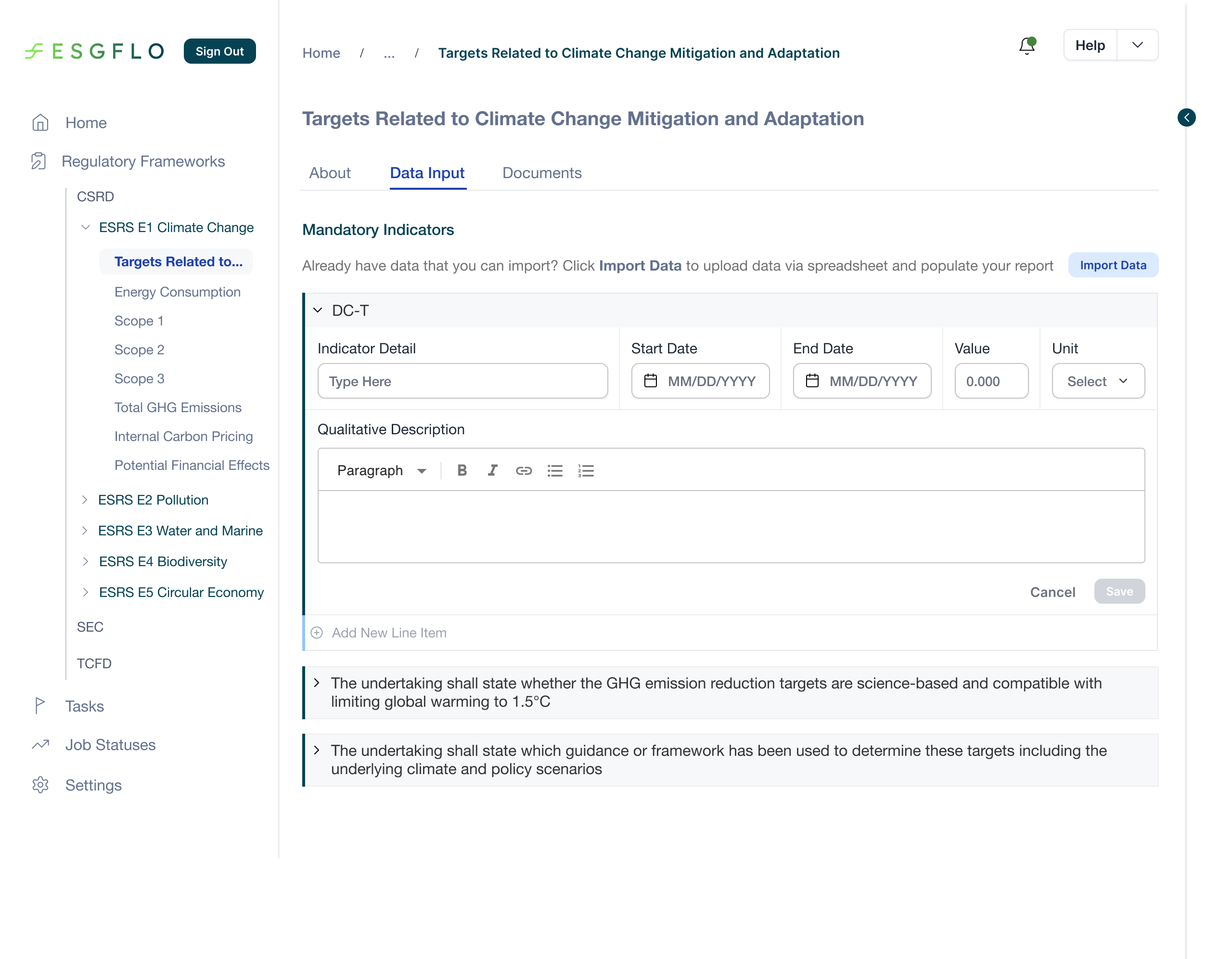
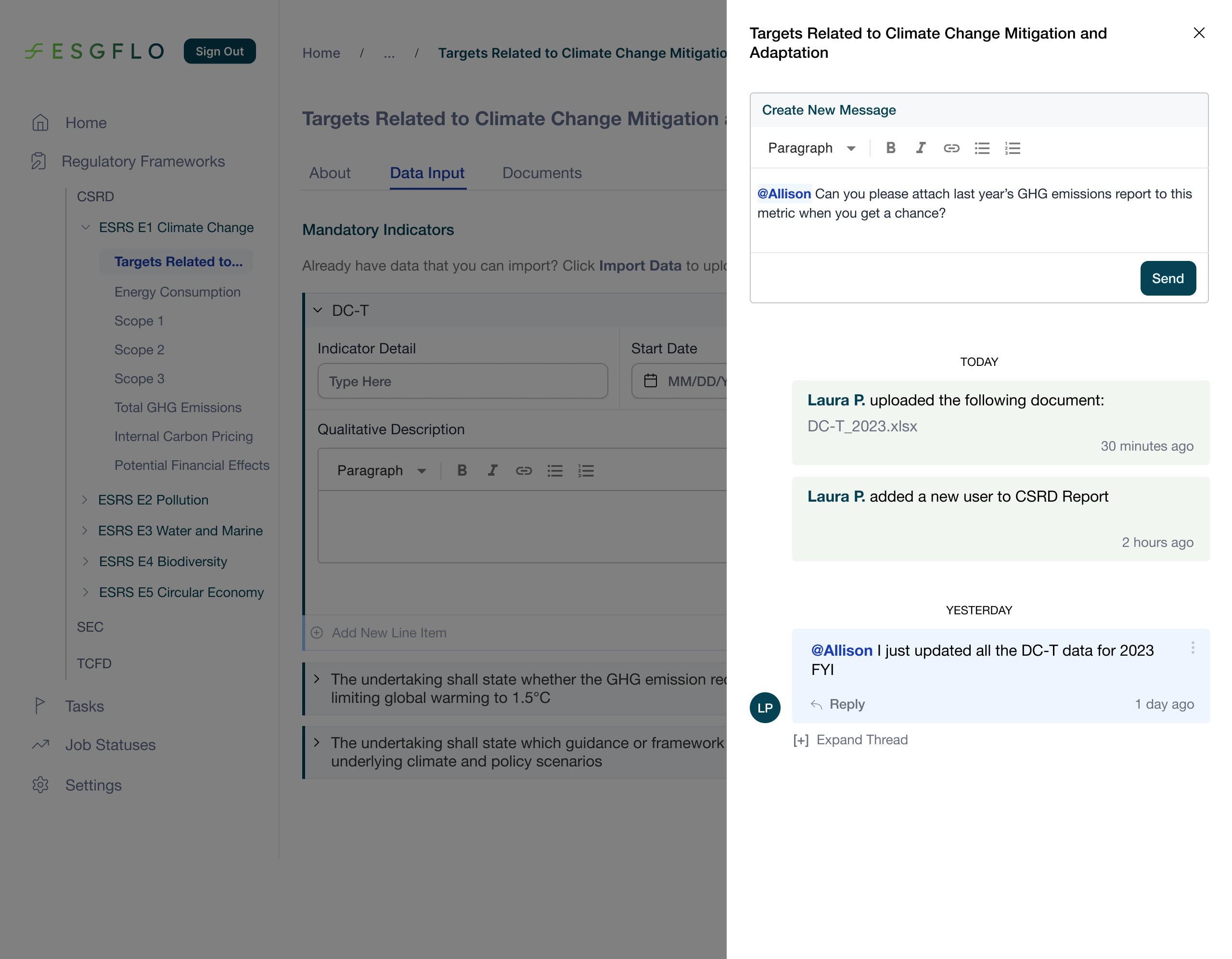
Throughout the MVP design process, I partnered closely with Product and Engineering to ensure the UI aligned with business goals and was technically feasible to implement. Given the complexity of ESG reporting, I focused on designing simple, clear workflows that would be intuitive for first-time users. By involving Engineering early and validating design decisions together, we reduced implementation risk and minimized design revisions later during build.
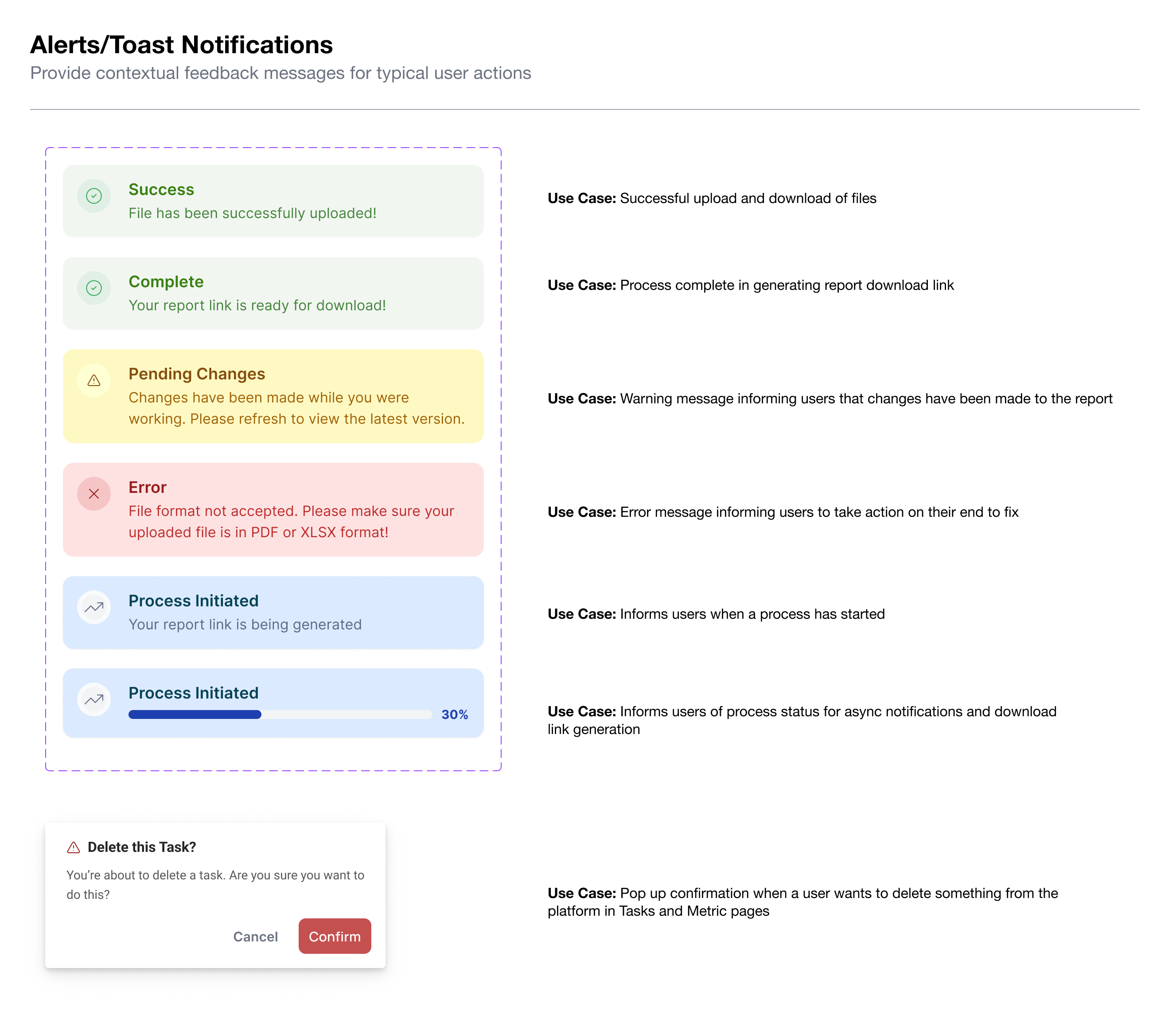
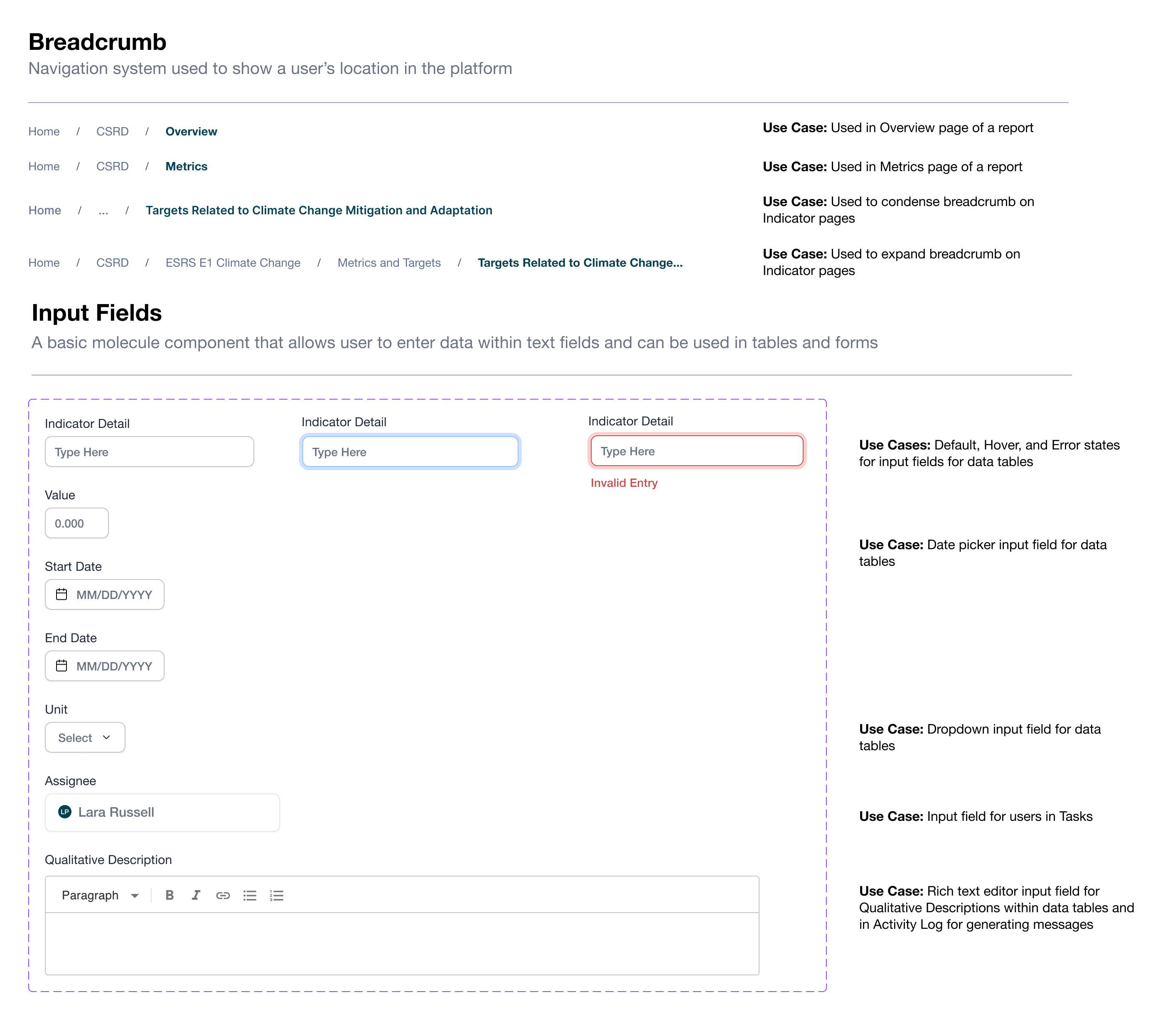
Building a Design System and Component Library
To support consistent implementation and scale future development, I created a lightweight design system and component library that documented the product’s foundational UI patterns and reusable components. This ensured alignment across design and engineering, reduced ambiguity during handoff, and helped accelerate feature delivery. I partnered closely with our Lead Front-End Developer to translate these components into Storybook.
Usability Testing and Product Refinement
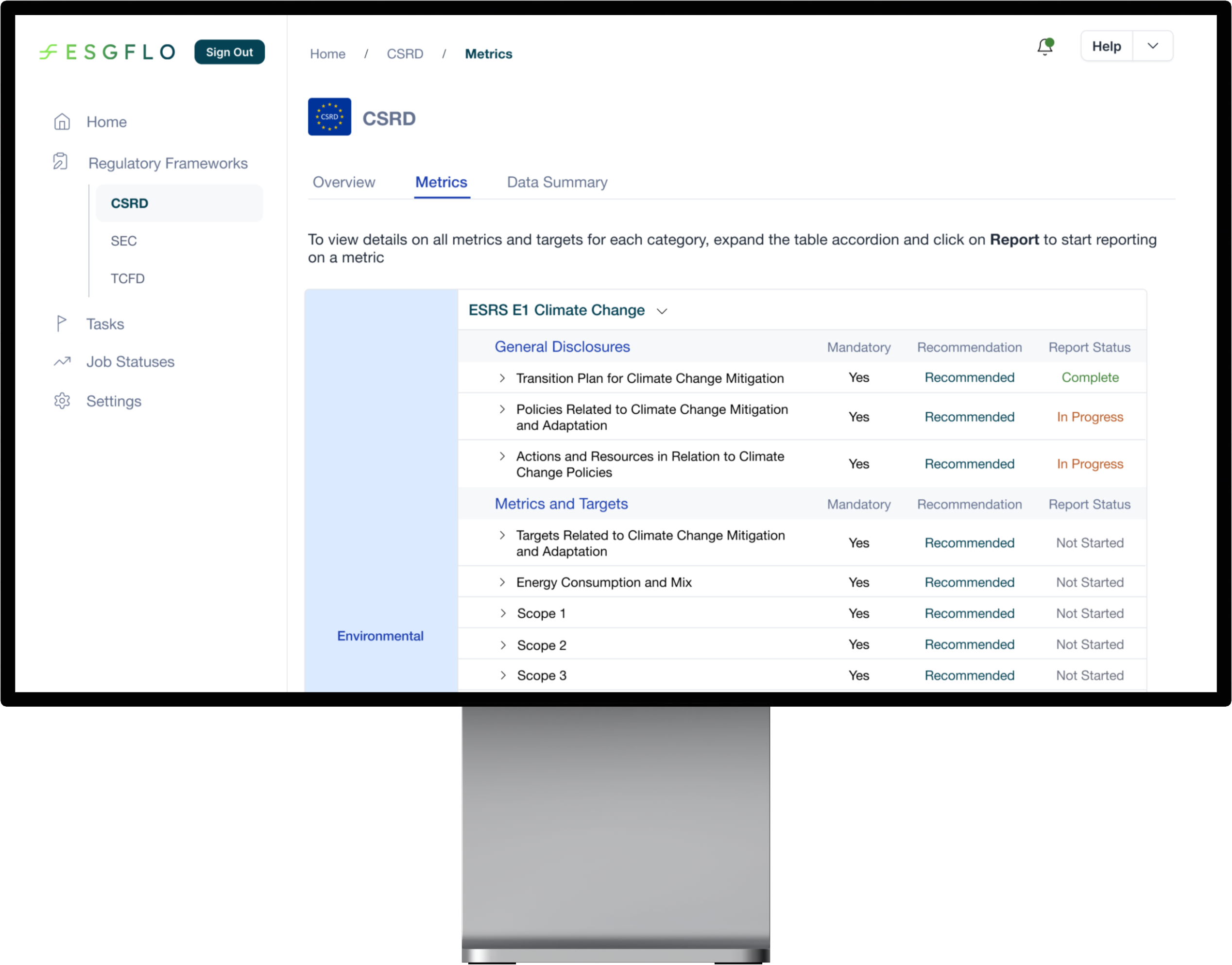
To further refine and validate our product post-launch, I led a series of moderated usability testing sessions to gather qualitative feedback and identify opportunities to refine the product. Given the complexity of sustainability reporting workflows, I structured task-based sessions that focused on real-world reporting scenarios so I could observe behavior, uncover friction, and validate whether the product supported users’ mental models. Example tasks include:
- Populating a reporting metric within a regulatory framework
- Creating a message and tagging another user
- Uploading supporting documentation to a reporting metric
Challenges
- Balancing feature additions with user experience
- Managing stakeholder expectations and feedback
- Advocating for design and accessibility
Impact
- Signed 4 new enterprise clients within 2 months of MVP launch and extended an existing contract by 3 years
- Positive indications of Product-To-Market Fit
- Enabled a client to shorten their audit cycle by streamlining reporting workflows